
National Society for Experiential Education (NSEE) is a nonprofit membership association of educators, businesses, and community leaders. Founded in 1971, NSEE also serves as a national resource center for the development and improvement of experiential education programs nationwide.
Hot Topics
|
|
|
| Saturday, October 15, 2011 12:54 PM |
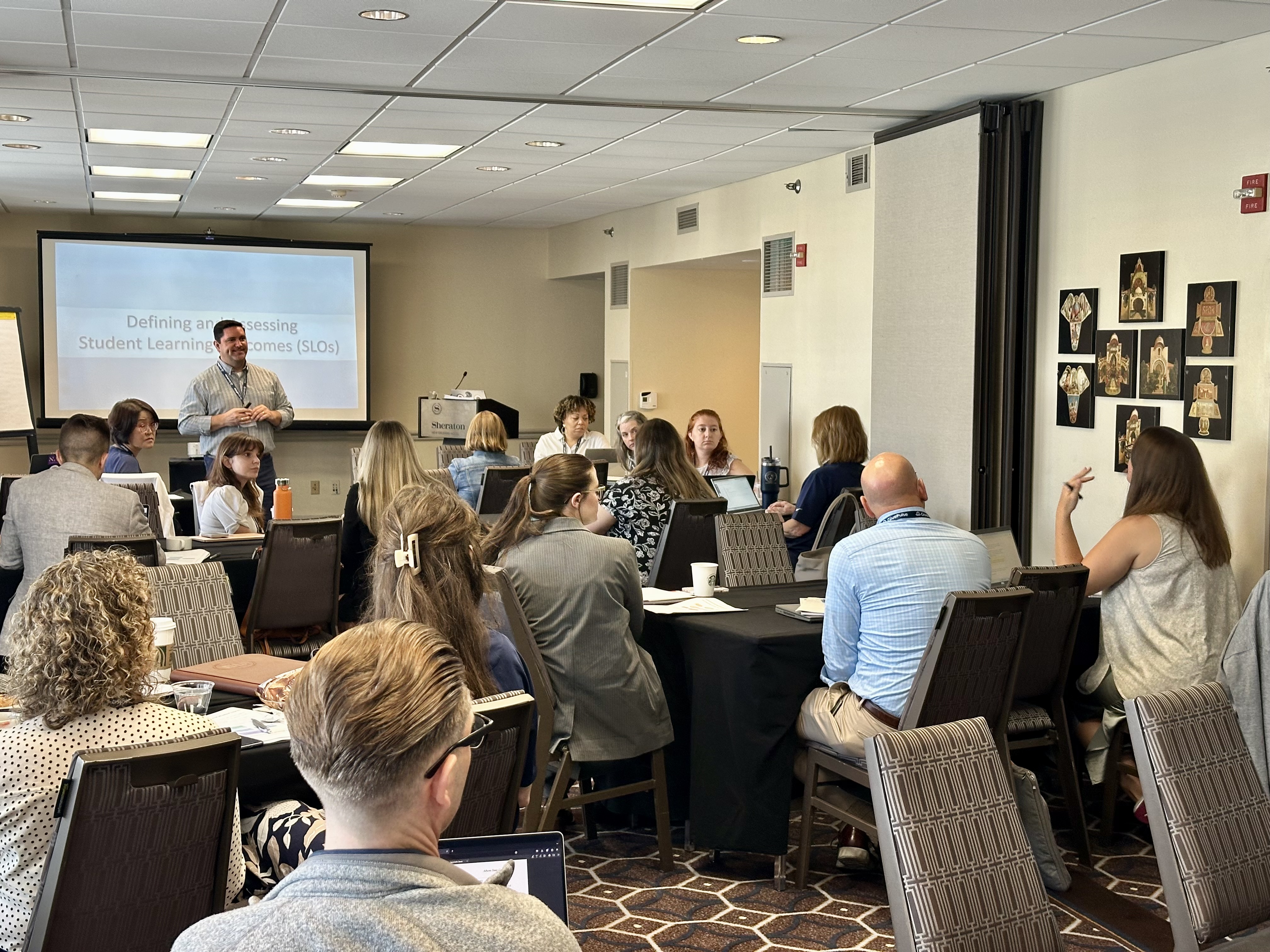
Experiential Education Academy (EEA)A key component of NSEE’s mission is to enhance the professional development of its members. Another component of the mission is to be the national leader in advancing experiential education as a field and a profession. To accomplish both aspects of this mission, NSEE created the Experiential Education Academy, Often referred to as the EEA or the Academy. The EEA supports and contributes to both the day-to-day work effectiveness and the long-term development of NSEE members through a series of professional workshops leading to a Certificate of Knowledge. The program is designed for all practitioners, regardless of specific experiential application. The set of workshops creates a common base of knowledge and competence for the field of experiential education and allows participants the flexibility to increase their expertise in their own particular interest areas. The Goals of the Academy
For newcomers to the field, the Academy provides the opportunity to become well grounded in the foundations of experiential theory, principles, and practices. For the mid-career to more accomplished practitioners, workshops are offered that probe ‘beyond the basics’ and delve into special topics. Issues of universal appeal such as legal issues in experiential education and assessment of learning, are also integral parts of the Academy. Members recognized for their leadership and expertise in the content areas facilitate the workshops. EEA workshops are offered prior to the NSEE annual conference and in regional institutes throughout the year. The CurriculumTo earn the EEA Certificate of Knowledge, enrollees complete complete a minimum of six Academy workshops, 5 of which must be selected from the following foundational workshops.
Enrollees in the EEA must also complete at least one elective workshop. In addition to the foundation workshop not selected by the enrollee, a partial list of elective workshops follows:
Workshop Descriptions:Foundation Workshops (Select 5 of the 6) Fundamentals of Experiential EducationParticipants in the workshop explore the theoretical and philosophical roots of experiential education and the principles of practice fundamental to all types of experiential learning. Participants have an opportunity to actively explore the implications and applications of this information, and to identify the resources available for continued professional development and use in their specific programs. Legal Issues of Internships and Experiential LearningThis workshop examines the broad range of legal issues that arise in administering experiential learning programs, with particular emphasis on the reciprocal rights and responsibilities of the academic institution, field-site, and student. Key issues such as risk management (including waivers, assumption of risk and insurance), protecting and accommodating student rights (including discrimination and ADA compliance), tax and compensation consideration, contractual obligations, student campus and field-site liability, and issues arising out of the use of public funds, are examined. Time is allotted for participants to engage in a discussion of these issues, as well as explore the application of legal issues to their specific programs in a "legal clinic" format. NSEE Principles of Ethical and Best Practice for Experiential EducatorsThe goal of the workshop is to examine and develop a deep understanding of each of the NSEE Eight Principles of Good Practice for all experiential learning activities. The workshop consists of three sections; each section contains a theoretical examination of the content area and a hands-on experiential component where participants will be given an opportunity to generate ideas specific to their own programs. Reflection: Making Experience EducativeWhile experiences comprise the first E in experiential education, it is through reflection that the learning takes its root and makes lasting changes. According to Kolb, learning is a process where knowledge is created through the transformation of experience. Reflection is integral to that transformation. This workshop explores methods for guiding students to be more reflective in their experiences, through the use of jounals and models for conducting seminars that promote reflection and reflective conversation. Assessment 101: Identifying, Understanding & Applying Outcomes Assessment in Experiential LearningThis workshop introduces beginners to the fundamentals of assessment in experiential learning settings and provides intermediate level assessment training for practitioners beyond the beginner's level, who seek to improve their outcomes assessment skills. The primary goal is to assist participants in the development of an outcomes assessment plan to use at their own institutions. Employing a hands-on, active learning approach, this workshop includes a mix of presentation, applied tasks, small group work, and interactive discussion. Teaching and Learning ExperientiallyThis workshop focuses on the teaching and the learning components of experiential education. Participants work in groups and use the Five Steps to Integrating Experiential Learning into Instruction to construct course syllabi, design workshops, lead or coordinate group experiences on their campuses. Participants create the experiential learning component in keeping with recognized principles to ensure that the experience is educative (a la Dewey). Attention is paid to learning goals and intended learning outcomes, as well as the challenges of experiential assessment. Elective Workshops Strategic Planning for Effective Experiential Education Program DesignThis interactive workshop, geared towards intermediate and advanced level practitioners, focuses on models of effective experiential education programs, programs implementations, and program management. Participants consider what "best practice" means in their environment and what should go into the design of an ideal program. Student, Staff and Faculty Issues & Responses in Experiential EducationThis interactive workshop considers students, staff and faculty issues in internships, service-learning and course-based experiential learning. Effective responses to the issues are identified with opportunities to discuss and apply them to situations challenging the participants. Internship issues are considered within recognized models of the experience. Included as well are discussions about seminar/colloquia classes, reflection as a tool for learning, and assessment tools. Strengthening Experiential Education Within Your InstitutionNSEE has pioneered the area of strategic planning related to the process of institutionalizing the full range of experiential education into educational and community institutions. This workshop addresses seven critical factors that need initial and ongoing attention: mission and values; curricular integration; faculty involvement; quality assurance and assessment; administrative infrastructure; budget integration; and strategies for change. Participants will examine alternative strategies and collaborate with one another in identifying appropriate approaches for their respective institutions/organizations. Service-Learning: The BasicsThe rich continuum of service-learning approaches provides higher education a sound and empirically-based approach to teaching and learning that results in the kind of higher-order understanding that colleges and universities promise but, in reality, is difficult to realize. This workshop focuses on course-embedded service-learning, complemented by participatory action research, and co-curricular campus-community collaboration, as significant ways to enhance the educational experience, meet higher education objectives, and mobilize resources for and to strengthen community partnerships. HOW TO APPLY:NSEE members who wish to participate in the Academy must submit an application of interest to the NSEE. Once done, they are registered in the Academy. There is no fee attached to this application. The application is available at www.nsee.org or by downloading the application here. All experiential education professionals are invited to explore the possibilities afforded by the Academy. Information is available at www.nsee.org, by contacting NSEE directly at 856-423-3427, or by email at This e-mail address is being protected from spambots. You need JavaScript enabled to view it .
Click here for curriculum prior to 2010 |
| Last Updated on Monday, January 30, 2012 03:13 PM |